
Blog
Positive Pressure Air Curtain Systems for TEMPSC Lifeboats
Published 20 August 2026
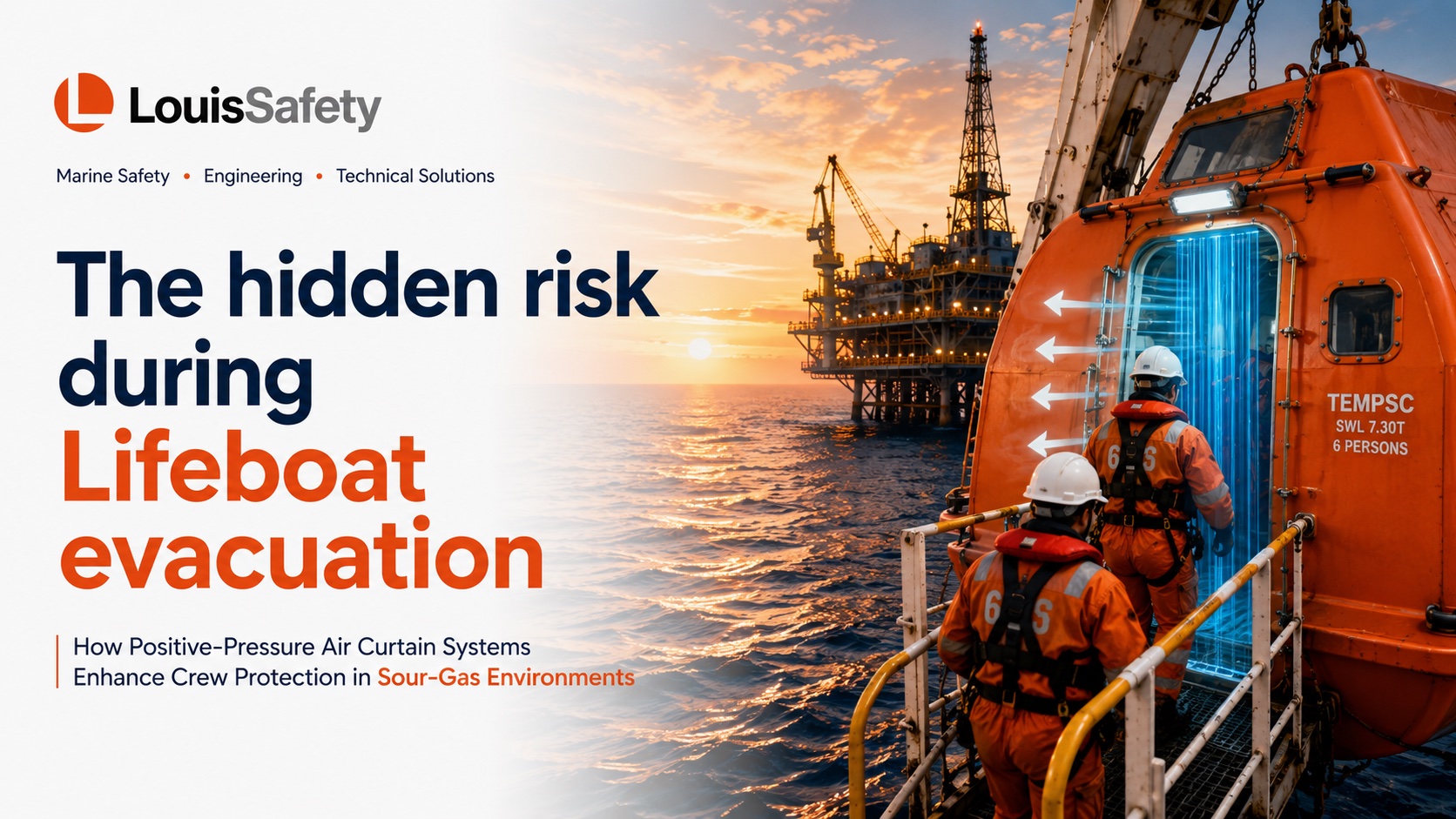
Protecting Offshore Personnel During Critical Sour Gas Emergencies
When a toxic gas release occurs offshore, every second matters.
While emergency procedures focus on safely moving personnel to the muster station, one critical risk is often overlooked—the few seconds when the TEMPSC (Totally Enclosed Motor Propelled Survival Craft) doors are opened for boarding.
During this brief period, hazardous gases such as Hydrogen Sulphide (H₂S) can enter the lifeboat before it is fully sealed and its onboard breathable air system is activated. In a sour-gas environment, these few seconds can significantly affect the safety of everyone on board.
Why Lifeboat Boarding Presents a Critical Risk
TEMPSC lifeboats are designed to protect personnel during emergency evacuation from offshore platforms, FPSOs, drilling rigs, offshore support vessels, and marine installations.
However, regardless of how advanced the lifeboat is, one unavoidable stage remains vulnerable—boarding. To allow personnel to embark safely, the lifeboat doors must remain open for a short period.
During this time:
- Hazardous gases may enter the cabin
- Positive cabin pressure cannot yet be maintained
- The onboard breathable air system is activated only after the doors are closed and sealed
- The available breathable air supply is limited, making it essential to minimise contamination before activation
For offshore assets operating in oil and gas fields, offshore production facilities, and sour-gas environments, protecting the cabin during embarkation is just as important as protecting it after launch.
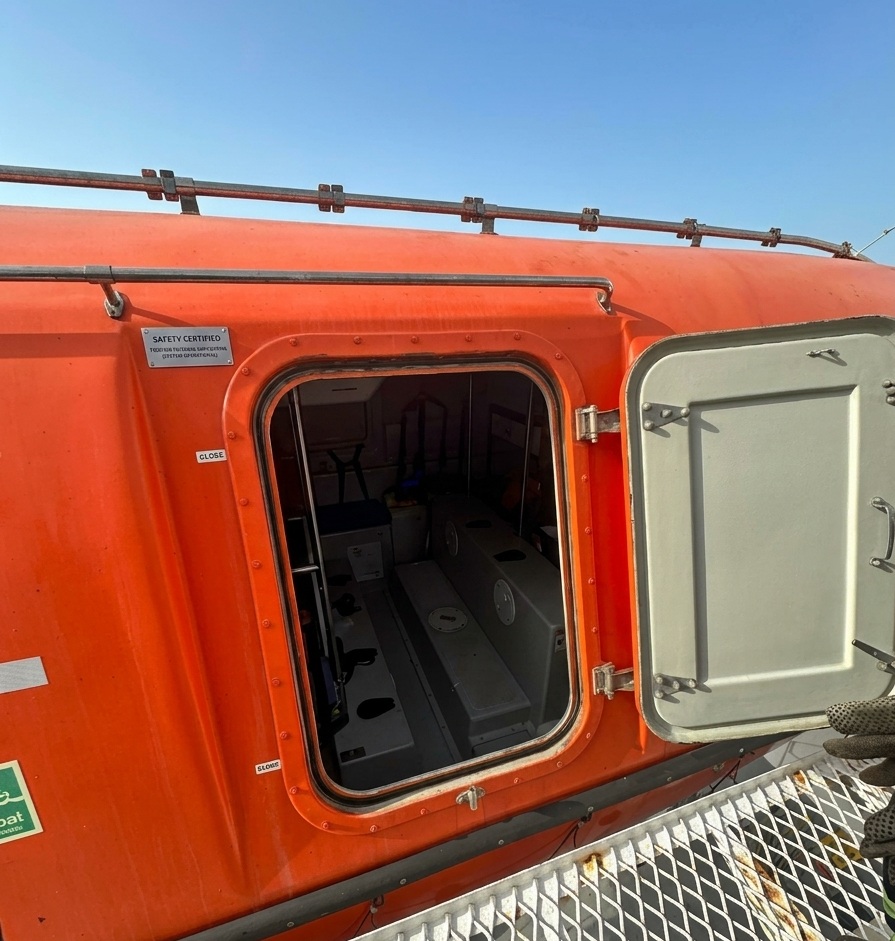
Understanding the Positive Pressure Air Curtain System
A Positive Pressure Air Curtain System is engineered to help reduce the risk of contaminated air entering a TEMPSC lifeboat during boarding.
As the lifeboat doors open, the system creates a continuous, high-velocity curtain of clean air around the entrance. This generates positive pressure at the doorway, helping reduce the ingress of hazardous gases while personnel board the survival craft.
Rather than acting as a physical barrier, the system uses controlled airflow to help maintain cleaner air inside the lifeboat during one of the most vulnerable stages of an emergency evacuation. Although boarding lasts only seconds, those seconds can be critical when toxic gases are present.
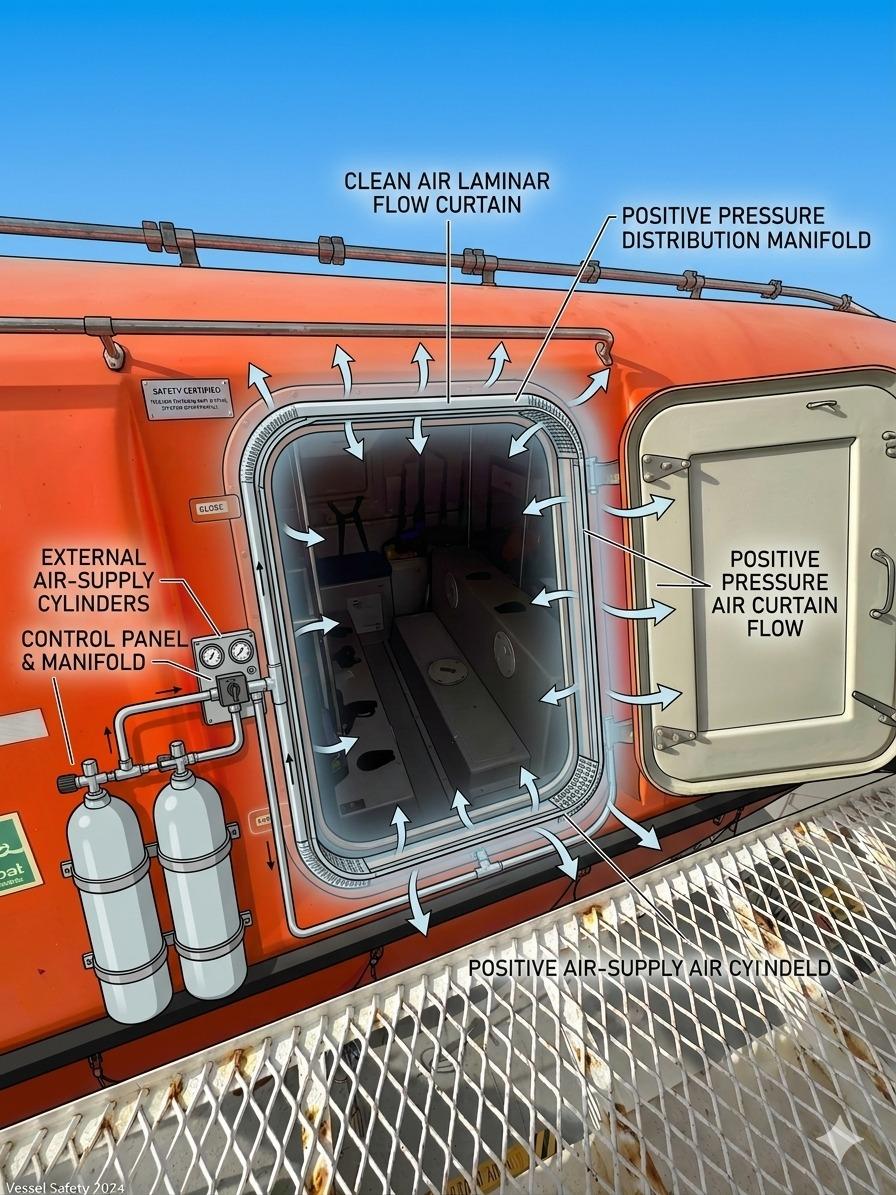
Key Benefits
A properly engineered Positive Pressure Air Curtain System can help:
- Reduce the ingress of hazardous gases during boarding
- Improve crew protection in H₂S and sour-gas environments
- Maintain positive pressure at lifeboat entry points
- Enhance emergency evacuation readiness
- Integrate with existing TEMPSC lifeboats
- Support project and classification documentation requirements
Typical Applications
Positive Pressure Air Curtain Systems are suitable for a wide range of offshore and marine assets, including:
- Offshore oil and gas platforms
- FPSOs
- Drilling rigs
- Offshore support vessels
- Jack-up rigs
- Floating production units
- Sour-gas processing facilities
- Marine energy projects
- Offshore construction vessels
These systems are particularly relevant for projects operating in the Arabian Gulf and other Middle East offshore regions where hazardous gas exposure is a potential risk.
Engineering Considerations
Installing a Positive Pressure Air Curtain System involves more than selecting equipment. Every project requires careful engineering to ensure compatibility with the lifeboat design, airflow performance, power requirements, operational procedures, and applicable offshore standards.
Project teams should evaluate:
- Lifeboat configuration
- Door arrangement
- Airflow requirements
- Hazardous-area classification
- Integration with existing life-saving systems
- Classification society and project documentation requirements
Proper engineering and commissioning help ensure the system performs as intended during an emergency.
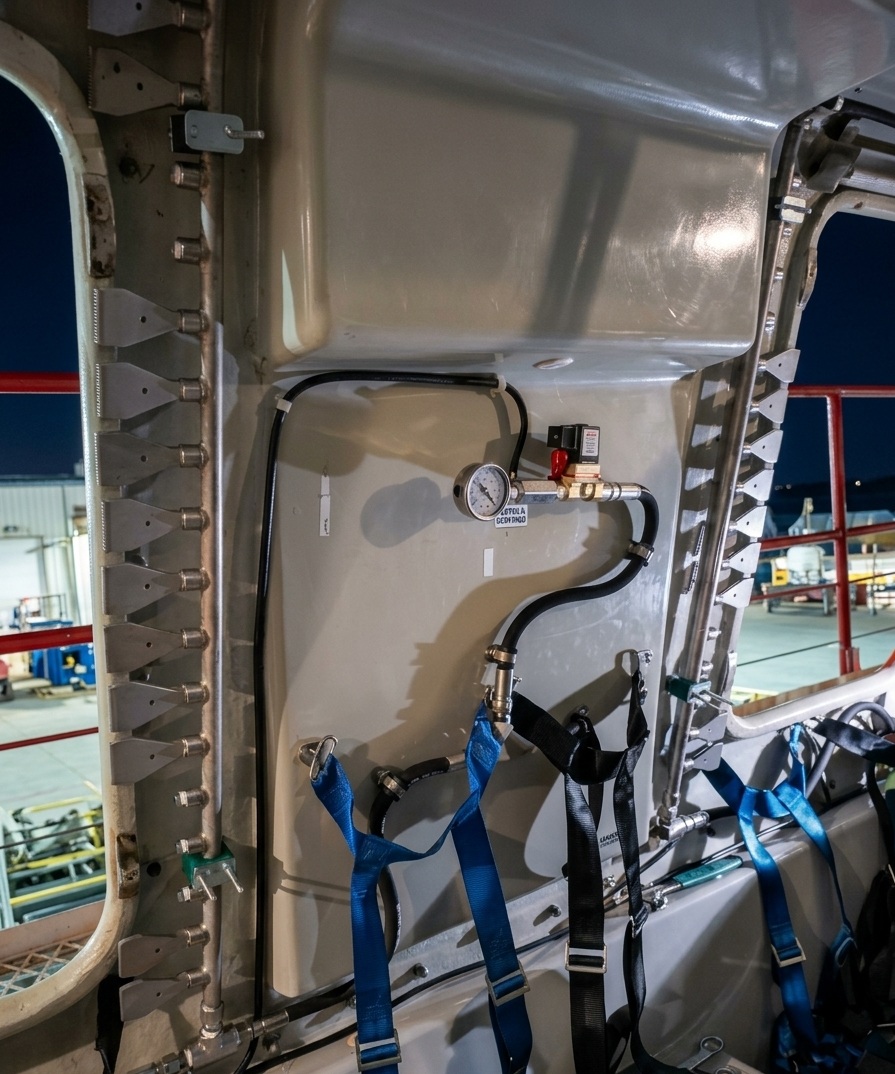
The distribution arrangement must be engineered around the doorway and cabin layout to provide controlled airflow without obstructing seating, restraints, or emergency access.
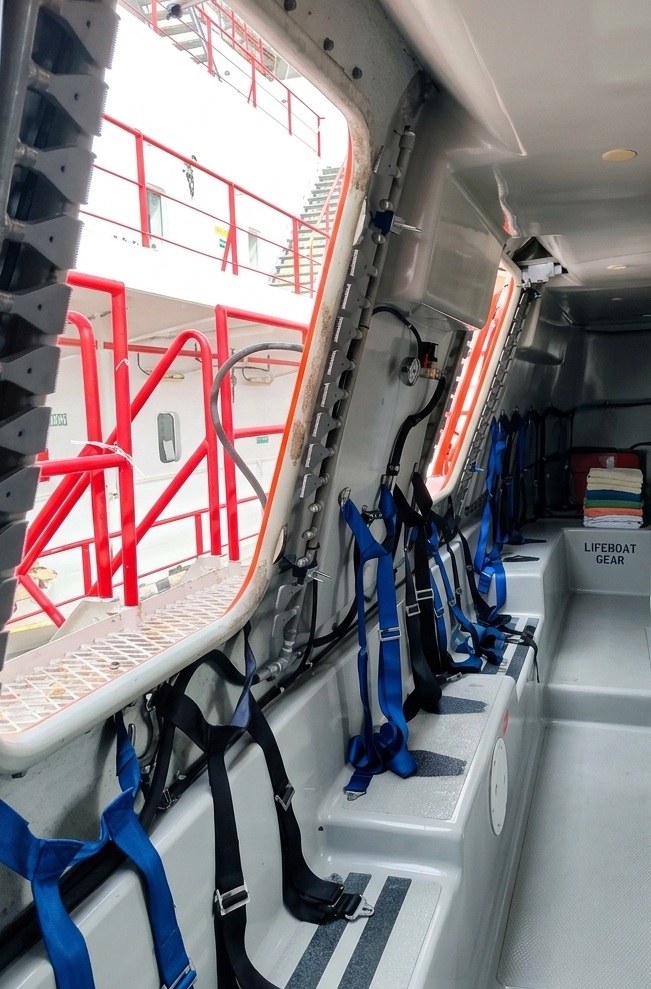
A Small Window That Can Make a Big Difference
Emergency evacuation systems are designed for situations no one hopes to experience. Yet the effectiveness of a lifeboat depends not only on how it performs after launch but also on how well it protects personnel during boarding.
In offshore environments where hazardous gases may be present, reducing the risk of gas ingress during those first few seconds can contribute to a safer evacuation process and greater confidence in emergency preparedness.
Considering this stage of the evacuation process early in project planning can help operators strengthen the overall resilience of their life-saving systems and support effective LSA inspection readiness.
Supporting Offshore Safety Projects Worldwide
Whether your project is located in Abu Dhabi, Dubai, elsewhere in the GCC, or overseas, selecting the right engineering solution for emergency evacuation systems is an important part of protecting personnel working in hazardous offshore environments.
At Louis Safety, our marine safety specialists provide complete Positive Pressure Air Curtain System solutions, including engineering, supply, installation, commissioning, technical documentation, and classification support for offshore and marine projects across the UAE and international markets.
If you are planning a new offshore project or evaluating existing TEMPSC lifeboats, our team can help identify the right solution for your operational requirements.
Frequently Asked Questions
What is a Positive Pressure Air Curtain System for a TEMPSC lifeboat?
It is an engineered system that creates a continuous curtain of clean air around the open lifeboat entrance, helping reduce hazardous gas ingress while personnel board.
Why is the TEMPSC boarding stage vulnerable?
The lifeboat door must remain open during boarding, so positive cabin pressure cannot yet be fully maintained and hazardous gases may enter before the craft is sealed.
Can an air curtain system be integrated with an existing TEMPSC lifeboat?
Integration may be possible, subject to the lifeboat configuration, doorway arrangement, airflow requirements, power supply, hazardous-area classification, and applicable project and class requirements.
Where are positive pressure air curtain systems typically used?
They are particularly relevant to offshore platforms, FPSOs, drilling rigs, support vessels, floating production units, and other marine assets operating in H2S or sour-gas environments.